We begin the journey towards our dreams by wanting, but we only get there by focusing, planning, and learning.
Christina Wodtke, author of Radical Focus
—
Bolzano. Monza. Bologna. Rome.
Four cities in five days.
I packed my suitcase Tuesday morning and won’t be able to unpack until a few hours later. It’s been a race against time.
But now it’s Sunday and there’s silence on the train taking me home.
And in this silence, as the journey draws to a close, I sorted out the notes I took with dozens of different teams.
There are teams that have completed yet another OKR cycle, and teams that will begin in January. I’m taking advantage of this quiet, during these final hours of travel, to share with you what I’ve seen “in the field.”
Easy, but they are not simple
Writing a goal on a piece of paper is easy. Anyone can want higher revenue or a happier team.
But turning that wish into reality? That’s not easy.
This is where many people get lost. They think OKRs are the most important to-do list in the company. However, OKRs are anything but.
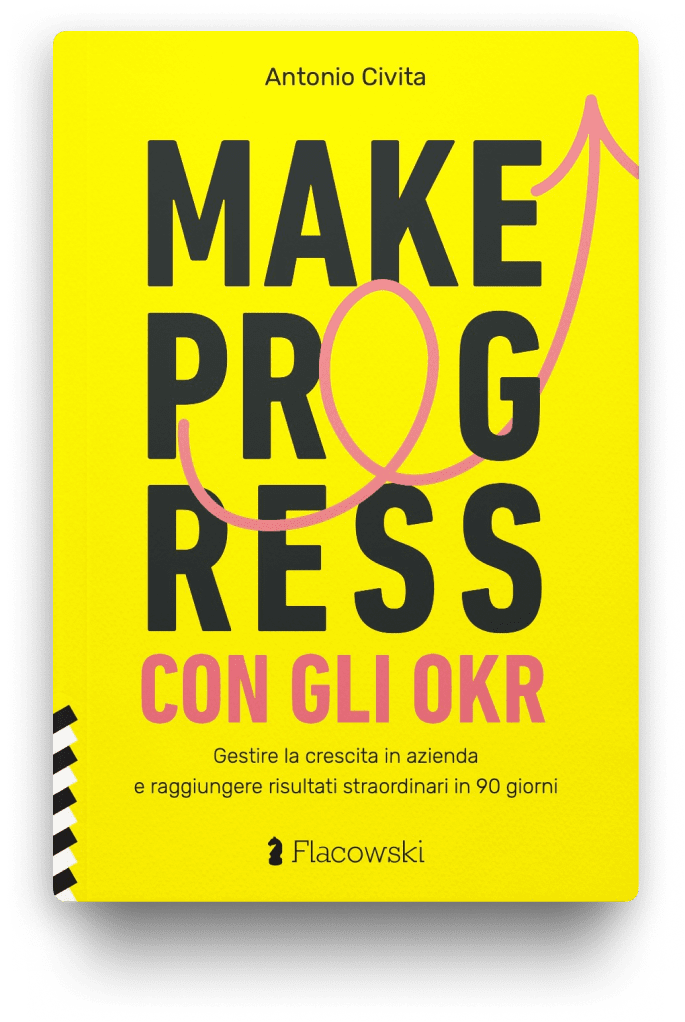
The MAKE PROGRESS® method isn’t about making you write better goals. It’s about building the infrastructure that allows you to focus, plan, and learn as the world around you changes.
10 Bugs You Can Fix Right Now If You Decided to Adopt OKRs in 2026
I’ve seen hundreds of teams struggle with the same demons. And fail because of flaws in the operating system, not talent. Here are the 10 most common bugs that turn a powerful strategic tool into an exercise in bureaucracy, and how the MAKE PROGRESS® method solves them.
Bug 1: Ghost Strategy
Many teams start writing OKRs without a clear strategy. OKRs aren’t the strategy; they’re the bridge that connects strategy to execution. Without a strategy, you can’t write OKRs.
The solution: Before writing your first goal, stop. Fill out the
Bug 2: the “set and forget” illusion
Launching is exciting. Writing down the goals makes us feel powerful. But strategy isn’t an event, it’s a process. The mistake is believing that the work is finished after the cycle launches.
The solution: Start the Drumbeat , the heartbeat of your company. Weekly check-ins aren’t about checking in on people, but about whether the strategy is working.
Bug 3: Confusing movement with progress
We’re all addicted to doing. Replying to emails, checking off lists, moving cards. It makes us feel productive. But being busy doesn’t mean being effective.
The solution: OKRs represent the end result of the work, not the work itself. The goal isn’t to work harder, but to work better. Don’t measure how much you’ve worked, measure how close you’ve gotten to the goal. Use Key Results to track changes in customer behavior or business numbers, not hours worked.
Bug 4: Everything is a priority
When everything matters, nothing matters. I’ve seen companies with dozens of OKRs per person, so everyone knows what to do. This isn’t focus, it’s organized confusion.
The Solution: The Focus Zone . Choosing what not to do is more important than choosing what to do. The MAKE PROGRESS® method requires you to limit your goals. Lack of focus is your number one enemy; combat it by communicating what you’ve decided to become undistractable about.
Bug 5: Confusing direction with command
There’s no point in writing down objectives in the privacy of your office and handing them to teams as instructions to be followed. This approach neutralizes the very effect everyone seeks when they decide to adopt OKRs: ownership. If the objective isn’t “mine,” I’ll do the bare minimum to avoid being scolded, not the maximum possible to excel.
The solution: bottom-up goal negotiation. Leadership has a duty to indicate the destination, but it must have the humility to leave teams the roadmap to get there. Ask your team: “Given this destination, what is the best contribution you can make?” When people participate in defining their own goals, they aren’t just following an order, they’re keeping a promise they made to themselves.
Bug 6: Sandbagging (playing low)
If you punish failure, you’ll get mediocrity. Teams, out of fear, will set low, easily attainable goals to secure a bonus or approval.
The solution: Use the Committed Growth technique to set goals correctly. This involves defining the level of growth possible with a 90% confidence level: reaching it means you’ve done your homework and corresponds to 30% of OKR progress. The true goal (100%) must be a moonshot. By separating the safety of the baseline from the ambition of the final target, you create a “safe-to-fail” space where teams can dare without risking their reputations.
This way of setting targets is unique to MAKE PROGRESS®.
Bug 7: Tying OKRs to Bonuses
It’s a recipe for disaster. If my salary depends on hitting that number, I’ll do everything I can to negotiate a lower number, or worse, I’ll fudge the numbers.
The solution: Evaluate the quality of execution instead of simply paying for percentage target achievement. Instead, use the wealth of data emerging from weekly check-ins to evaluate contribution to the strategy. Reward timing (in updating data and flagging issues early), precision (in forecasting and analysis skills), and the ability to influence results (by resolving roadblocks and unlocking the work of others). OKRs tell the truth about your performance; bonuses should reward this real impact, not luck or the ability to negotiate easy targets.
Bug 8: Airtight silos
Marketing has its goals, sales its goals, the product its goals. And no one talks to each other. Everyone optimizes their own little patch while the company as a whole suffers.
The solution: Align OKRs with the Gears of the Growth Machine. Instead of assigning objectives by “department,” assign them to a “gear.” A gear doesn’t belong to a single function; it’s a strategic effect that requires the simultaneous contribution of multiple teams.
Bug 9: Poor data quality
Many teams try to write OKRs before they have the data. They invent Key Results based on numbers that don’t exist or aren’t measured, falling prey to availability bias: they measure what’s easy, not what matters.
The solution: train your data literacy. Before even thinking about goals, you need to build your
Bug 10: Learning Paralysis
Getting to the end of the cycle, realizing that the goal has failed, and starting over again without asking “Why?”
The solution: conduct a strategy refresh . At the end of each cycle, pause. Analyze not just the “how much,” but the “how.” What roadblocks held us back? What have we learned about the market? Without learning, experience doesn’t transform into expertise.
System update
I engineered the MAKE PROGRESS® method precisely to address these structural flaws. MAKE PROGRESS with OKRs is a setup manual for your new business operating system.
If you want to build a predictable growth machine, you can get started today by purchasing a copy.
Especially during this time, when many teams are planning for the new year, it’s the best gift you can give yourself and the people you lead . Give them clarity, autonomy, and the satisfaction of seeing their work translate into results.
ALWAYS MAKE PROGRESS ●↑
Antonio