Hey, happy Monday!
There is a saying that everyone who chews numbers knows:
“You can torture them and make them tell you whatever you want.”
For example, look at what happened with the pandemic data and the vaccination data. Everyone bent reality as it suited them.
The same thing happens in meetings of companies that use people as machines by finding themselves discussing spreadsheets full of numbers and excuses.
The topic of using data, but more importantly attaching to it a story that is understandable, motivating, credible, and ethically useful to our goals is one that is very close to my heart. Keep following this newsletter because I will be discussing it soon in an upcoming note as it connects to one of the founding pillars of STRTGY, that of helping leaders make “Management by Real Time Numbers.” as opposed to the common and unfortunately hugely popular “Management by Untold Expectation.”
Output fract time
If you produce nails, it is important to calculate the number of nails produced per hour.
The same if you produce ice cream or automobiles.
It is a simple ratio that measures the production capacity of a particular processing technology (technology understood as a set of processes and processing systems). That is, the maximum number of products that a production unit can bring to market in a given period.
It is obviously very easy to calculate this ratio for a machine than for a human. Unless … you decide to treat people, at your own peril, as machines.
Imagine being measured for
- number of tasks per hour
- number of emails sent per hour
- number of meetings expected per day
- number of logos produced per day
- …
Which of these numbers really indicates that your productivity has increased from yesterday?
Productivity redefined
To measure productivity, it is important to understand not only what we are producing but also why we are producing it-that is, how an increase in what we produce is directly related to the growth in the impact our organization buys into its arena.
In the previous examples we are talking about output And volumes. One tot per hour.
The fact that these outputs are being produced at a certain rate does not indicate that the organization is necessarily increasing its value.
Indeed, an increase in production is probably much more likely to be linked to an increase in costs.
So how can we define a day productive?
How can we end the day proud of what we have done? Sure that we have contributed to growth?
We should then talk about outcomes. That is, of the result of what we do and the contribution we make to a larger goal that we share.
I could without difficulty write this note with 2,000 or even 3,000 words. I could also measure my writing speed by how many words I can write per hour. But would that mean that my Sunday was productive?
Rather, I should write a newsletter that regardless of length stimulates readers to take an action that is important to both of us. For example, in order of priority:
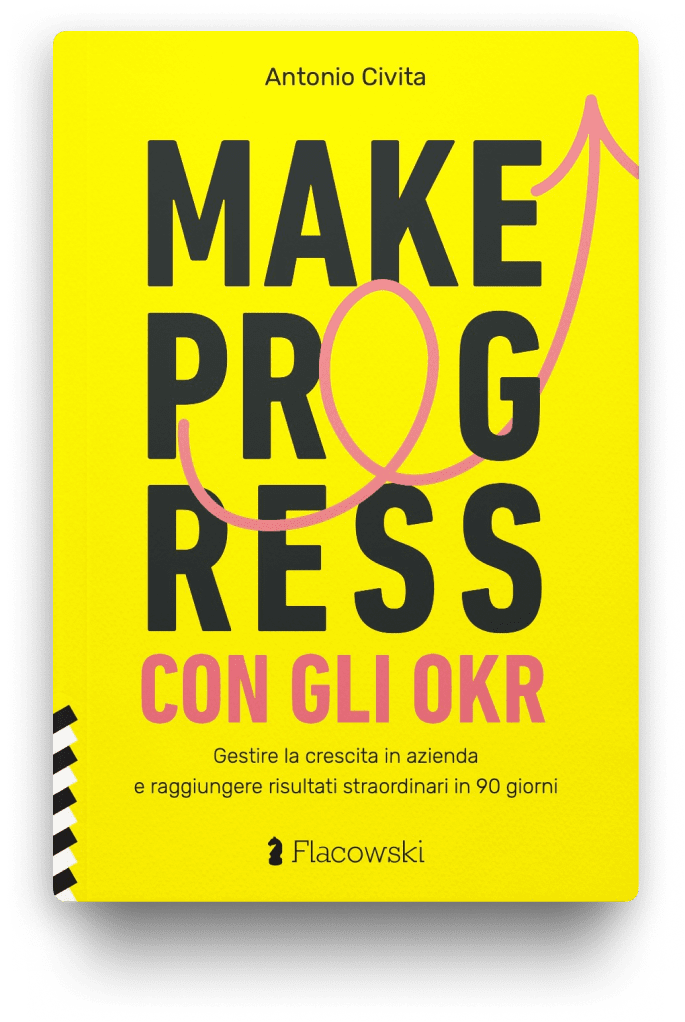
📘 Demonstrate interest in and contribute to the book on OKRs most practical there is
🗓 Set up a brief meeting to discuss these topics in more detail
📧 Respond to this note with your feedback or questions
👥 Share this note with colleagues or your friends on social media inviting them to join
💛 Follow STRTGY on Instagram o LinkedIn to make sure you don’t miss updates and interesting links
☝ Visit the site and read more content
Only now can I measure my productivity based on how the metrics associated with each bullet point have changed. And certainly not on the number of words.
If you want to avoid shutting down your computer and ending a day exhausted, and especially if you are a leader, and you need to keep your team from being exhausted, it is not important to define what the effects of one’s best work are, it is vital.
Fast-acting
Some notes from STRTGY are vitamins, some are pain relievers, and some, the most important are quick and decisive actions.
Like this one I want to invite you to do.
Below you will find the link to Miro’s board in which the instructions for the Growth Machine Workshop which was held on September 8 with the STOPCODING community.
👉 https://bit.ly/STRTGY-TGMWorkshop-Stopcoding
Choose a time to work on it, alone. It will take you no more than an hour.
The workshop is designed to enable you to identify what are the outcomes key outcomes that contribute to growth, and you can then realign your and your team’s activities around that handful of positive outcomes that really move the bar.
Once you have completed your Growth Machine, you can identify metrics for each gear that will let you know if there was a contribution to that outcome and enter them into a shared spreadsheet.
Set a recurring appointment in your calendar to review them and follow this agenda for the most important meeting of the day, the one with yourself.
10 min with myself (Mon, Tue, Wed, Thu, Fri – 9:00, 9:10)
- Update the numbers
- What did I do to change them? (be specific)
- What, on the other hand, had no effect? (what to stop doing)
- What am I stuck on?
- What will I do to change them? (optimize your tasklist)
Congratulations on increasing your productivity.
Always Make Progress!