Hey, happy Monday!
Last night I had a nightmare.
“We have to stop with the OKRs!”
“What’s going on?”
“They’re all on vacation!”
“But your targets don’t go on vacation…”
Q3 goals always go out the window. As long as they are launched it’s mid-July that already starts with all the “we’ll talk about it in September,” August everyone is on vacation… It’s back to September that you have to catch up on activities and… prepare for Q4!
Q3 has never existed!
This does not happen to those who follow the “Make Progress” method.
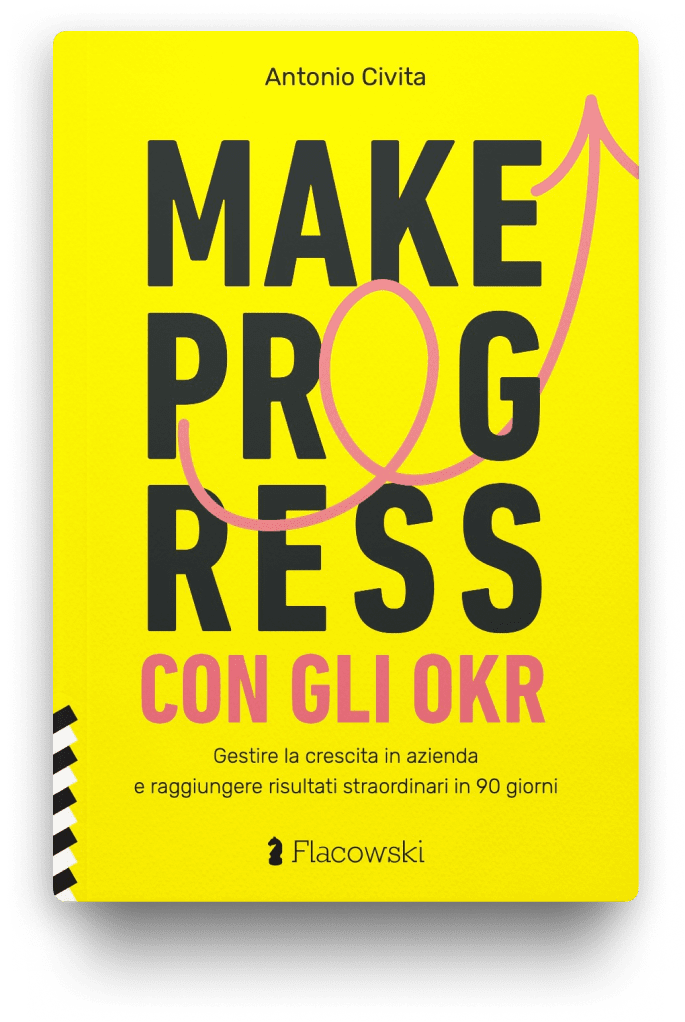
Shameless Self Promotion: have you pre-ordered your copy yet? Order it now and get immediate access to all templates
Before I let you read the of notes I have extracted directly from the pages of the book I am finishing writing these hot days, I wanted to tell you that the REPLAY of the STRTGY Meeting with Federico Ferretti, Head of Design at Haier, which took place last Monday, is available.
An hour-long conversation with many community members in which we talked about:
- How Haier is organized in Europe
- how the design team is organized
- How to apply the principles of RenDanHeyi to everyday work
- and so much more!
Request it by visiting this link. REPLAY STRTGY MEETING 19
ALWAYS MAKE PROGRESS
-Antonio
● OKR / Drumbeat
The quarter that doesn’t exist
Most companies divide the year into quarters following the fiscal calendar. Q1 which runs from January to March, Q2 which runs from April to June, Q3-the one in question-which runs from July to September, and Q4 which starts in October and closes the year.
To teams working with STRTGY, and to all who will read “Make Progress with OKRs” I advise against following this timetable for 2 reasons.
The first is that at the end of each quarter there is so much pressure on the numbers that no one has time to think about OKRs.
Sales teams are busy preparing their reports between final and forecast sales. Finance has to do a lot of math including VAT, advance taxes, and other bureaucracy typical of any business model. HR is underwater because usually, especially the summer period, seems to be the one with the highest turnover, a headache that adds up to all the vacation planning that needs to be prepared.
In short, this division of the year is not exactly congenial for the OKRs.
The second reason is more methodological than technical/organizational. The division into fiscal quarters is very useful for maintaining the focus on performance that everyone focuses on short-term tactics. But when does the time come to talk about strategy?
What is the solution?
Divide the year into four quarters.
- Early 202X → runs from January to April
- Mid 202X → runs from May to August
- Late 202X → runs from September to December
What are the advantages?
➀ An extra month to make progress
Having 20 extra days of work makes even the most ambitious targets achievable and negotiations easier. Teams are better able to manage their schedules especially teams with people spread across multiple countries who may have holidays in immediately preceding or following periods risking stalling projects longer than necessary. Sales teams can also rely on larger buying windows.
➁ Fresh numbers
Fiscal deadlines cannot be moved, and this, for better or worse, forces teams to update numbers. Great news for OKRs as there is no better opportunity to update KRs and include new results in the quarterly strategic refresh .
➂ More space for strategy
Separating strategic planning from performance measurement is helpful in reinforcing the notion that OKRs do not measure people but progress on strategy execution. This creates agenda space for meetings completely dedicated to strategic planning where team members participate in a more creative spirit. In addition, by avoiding synchronization with the fiscal calendar, you also avoid matching performance reviews-which impact paycheck bonuses-with progress on your goals. In the book, you will also find guidance on this issue to help you integrate engagement data with OKRs with performance review mechanisms.
Is there anything else?
Yes, I will tell you about that in the near future.