At the end of this article, I’ll leave you with some more Netflix movie suggestions related to business strategy.
You can find more tips in the Halloween edition of this newsletter, where I’ve rounded up films about real-life corporate stories and financial crises that have been turned into movies.
BlackBerry the movie and the book
If you’re looking for something interesting to watch tonight, I highly recommend BlackBerry , Matt Johnson’s film, available on Netflix, which chronicles the rapid rise, and equally rapid fall, of Research In Motion (RIM), the company that created the famous phone with the integrated keyboard.
This isn’t a documentary, but a compelling story of how this company went from dominating the mobile market with a 40% share, to completely losing its position. Today, BlackBerry has completely transformed and focuses primarily on cybersecurity, the Internet of Things, software, and security services for businesses and government institutions.
The Research In Motion story is a classic example of the innovator’s dilemma and disruption : initial success generates such confidence that it ignores signs of change, remaining rigid, tied to a business model with a few large customers, thus damaging the corporate culture and the ability to innovate, as happened after the launch of the iPhone.
The entire story revolves around the diametrically opposed figures of the two co-CEOs. The film is inspired by the beautiful book Losing The Signal by Jacquie McNish , in which the author explores in detail the themes surrounding their very different approaches to running the company, which, while initially advantageous, led first to strategic confusion and then to defeat.
The Rise of RIM and the BlackBerry
The company was founded in 1984 by Mike Lazaridis, an electrical engineering student at the University of Waterloo in Canada, and his childhood friend Douglas Fregin.
Fun fact: In the film, Douglas Fregin is played by the director himself and is the hippie kid with the headband, a video game enthusiast who drives a Honda Civic with the tag “my other car is a Porsche.”
One of Research in Motion’s most notable projects was a hybrid device that combined a pager and a telephone and was capable of sending email: a major innovation for the time!
It’s important to remember that at the time, the telephone network didn’t support internet or data; there were therefore significant technical limitations, but their engineering prowess made them pioneers in devices such as pagers and wireless payments.
Mike was the technical mastermind behind this project; in the film, he’s portrayed as a product-focused nerd with a love of technical challenges. His design philosophy was to create a safe, reliable, and intuitive device.
The prototyping phase is particularly interesting: in the film, Mike and Douglas collect toy and electronics parts to build the first phone to demonstrate during a board meeting. The innovation lay in the presence of a physical QWERTY keyboard below the screen, allowing for quick typing, representing a paradigm shift in usability. A memorable scene shows the Verizon CEO holding the device in his hands, unsure how to use it; Mike suggests he try typing with two thumbs, just like many people type on WhatsApp today. The name BlackBerry was also born in that meeting.
BlackBerry’s (Real) Strategic Moves from Founding to Failure
Let’s move from film to reality for a moment to reconstruct RIM’s strategic moves from the beginning to the final pivot because I think some are particularly brilliant and can be inspiring.
1984 – 1987 · First steps at university
The company was founded with around $15,000 Canadian dollars won in a science competition and supplemented by family loans—it was used to design LED displays and test systems for IBM computers. The initial strategy was to find “high-tech niches” that the big players didn’t consider profitable.
RIM goes from being a garage-based startup to a wireless data pioneer: it develops proprietary hardware, networking and compression software, enters into partnerships with mobile operators and lays the technical foundations (Mobitex + encryption + mini keyboard) that will explode three years later in the first real BlackBerry .
1988 – 1991 · The “wireless data” breakthrough
RIM identified an opportunity in Ericsson’s Mobitex network (then used for pagers): to send not just short messages but actual digital data. It thus built a protocol converter that allowed laptops and terminals to send packets via Mobitex. The project received funding from the Canadian government and a pilot contract with RAM Mobile Data in the United States. This is where the idea of “portable email” blossomed.
This is crucial, because it will be the foundation of its most successful product: the ability to send unlimited text messages online. A precursor to WhatsApp!
1992 – 1996 · Modem and first institutional funds
In 1992, former consultant Jim Balsillie invested $125,000 of his own money, took a stake in RIM, and became co-CEO alongside Mike Lazaridis: his negotiating skills opened the doors to capital and contracts with large companies.
To demonstrate its commercial viability, RIM launches a PCMCIA modem for notebooks : field technicians can now connect to company servers without a landline. The product wins corporate customers and convinces Canadian venture capital firm Working Ventures to invest $5 million. With that funding, Lazaridis opens an R&D department dedicated to data compression and encryption: essential building blocks for the future of push email.
Collaborations with Bell Northern Research and D-Link allow RIM to refine its software stack and miniaturized antennas. In January 1996, the company reaches 100 employees and presents the prototype of the Inter@ctive Pager 900 : the first pager that not only receives but also sends messages typed on a micro-keyboard. The device obtains certification from the U.S. Federal Communications Commission that summer and is adopted in beta by Morgan Stanley and the U.S. Secret Service.

1996 – 2002 · Building the moat
In the first six years RIM focused on creating the so-called moat .
What is moat in strategy?
Imagine a medieval castle: all around it is a large moat filled with water and perhaps even crocodiles. The moat serves to keep invaders at bay: the wider and deeper it is, the more difficult it is to attack the castle.
In business parlance, “the moat” is the same thing, except that instead of water, there are factors that make life difficult for competitors. A company with a good moat has something that others can’t quickly copy—or that would cost too much to copy.
The RIM moat
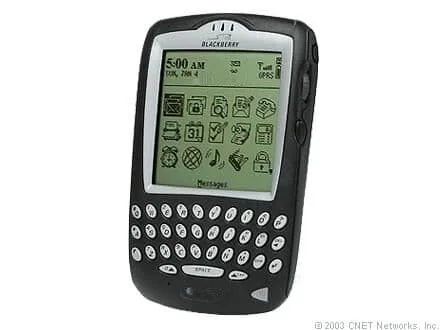
For RIM, the moat starts with the Inter@ctive 900 bidirectional pager and, soon after, a proprietary Java platform with end-to-end encryption that wins over security-sensitive governments and banks.
The real stroke of genius, however, is the BlackBerry Enterprise Server: if IT buys the server, it must equip all employees with a compatible device , generating prohibitive migration costs and a near-total lock-in. The revenue-sharing agreement with the operators transforms the push-email service into a new revenue stream for the carriers , who begin to promote BlackBerry over Nokia.
In 2002, the miniaturized QWERTY keyboard arrived: typing emails on a phone became faster than on a laptop. The “CrackBerry” tribe was born because typing on a keyboard was so enjoyable it became addictive.
The result is an ecosystem of devices, software, and networks that no competitor can fill in the short term.
2003 – 2006 · Scaling with hardware
Having consolidated their technological advantage, the Lazaridis-Balsillie duo imposed a rigorous financial drive and an annual hardware roadmap (7000 series, then 8000) that allowed them to squeeze the supply chain and keep the gross margin above 50% .
The NASDAQ IPO and an aggressive stock option plan multiplied the share price in two years, allowing the company to attract talent to Ontario away from giants like Google and Nokia. The back-dating scandal erupted, the unfair practice of backdating employment contracts to periods when the stock was worth less, granting executives a guaranteed profit that wasn’t recorded in the company’s books. It was thanks to the encrypted and undecipherable messages on the company’s servers that Balsillie avoided prison.
During this period, BlackBerry Messenger was made free to enter the consumer segment without affecting enterprise contracts, and the network effect exploded, attracting 10 million users in 18 months. RIM purchased Certicom’s SSL patents , strengthening encryption and further raising the barriers to entry. Growth remained solid, but the focus on hardware paved the way for the next shortsightedness.
2007 – 2009 · The iPhone Sucks
The arrival of the iPhone in 2007 caught RIM off guard: its leadership publicly commented that “no one wants a phone without a keyboard” and that it was “deeply flawed from day one” due to what they perceived to be its weaknesses: battery life, security (substandard by BlackBerry standards), and the absence of a physical keyboard, which was considered a must-have.
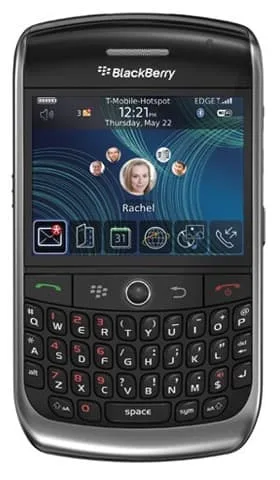
Initially, the response to innovation was incremental, that is, they tried to improve the existing product by launching the BlackBerry Bold with a sort of central button that functioned as a trackpad, but did not generate a wow-effect.
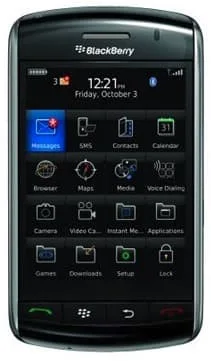
To remedy the lack of hype, “Project Thunder” was born, which later became the Storm model: a hastily released touchscreen with mechanical feedback , plagued by such serious bugs that everyone returned it, causing RIM enormous financial losses.
To counter Apple’s launch of the App Store, BlackBerry App World is introduced, but the closed SDK and unfavorable revenue share discourage developers: the application ecosystem remains anemic.
These years mark the transition from market innovator to follower chasing other people’s features, losing control of the narrative with consumers and partners.
2010 – 2013 · Failed reboot
Lazaridis designs the first tablet, which he calls the PlayBook, which inexplicably comes out without an email client and to make it work you have to connect it to a BlackBerry, condemning it to flop.
BlackBerry had two options: remain a phone company or become a service provider. Co-CEO Jim Balsillie wanted to sell their famous “push email” service to competing carriers, so they could make money from software rather than hardware. The board of directors refused, further exacerbating the conflict between the two co-founders. Soon after, BlackBerry had to pay $612 million to settle a long-running patent lawsuit with the small company NTP: much of its cash disappeared, leaving it without the money to innovate.
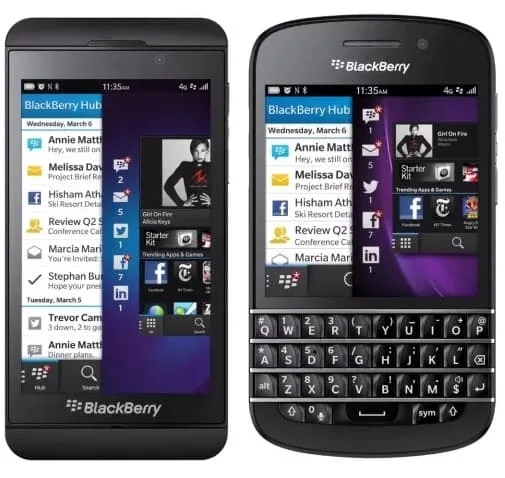
When Thorsten Heins became CEO, he laid off thousands of people to save money and launch the new BB10 operating system. Unfortunately, the Z10 and Q10 smartphones were released in 2013, two years later than expected, and without strong support from mobile carriers. Meanwhile, users had already migrated en masse to iPhones and Android phones, which offered many more apps. Thus, BlackBerry found itself with few customers, few apps, and little time to catch up.
2014 – 2020 · Goodbye smartphones
With the arrival of John Chen – famous for having turned Sybase around so well that it was acquired by SAP in 2010 to integrate its mobile technology into enterprise platforms – BlackBerry stopped making its own phones and focused on security software.
The company’s restructuring process required cutting operating costs by more than half and handing over hardware production to Foxconn, with which it launched the BlackBerry Priv, a smartphone based on a special, super-hardened version of Android and with a retractable keyboard, but this too didn’t work.
In 2018, it acquired the cybersecurity company Cylance to bring AI to its products and sold several patents to Catapult IP, raising $600 million to finance the expansion of its SaaS business. Thus, BlackBerry abandoned the smartphone scene and reborn as a “security-first” specialist.

Geek vs. Manager
One of the things I appreciated about the film is how it highlights the impact of corporate culture on results .
On one side, there’s Mike, an engineering genius who staunchly defends his design principles and is enamored with the problems he solves. On the other, there’s Jim, a fierce businessman, a shark capable of negotiating anything and winning over important deals.
At first, this dynamic works well, allowing them to inject capital into the company and channel the team’s creativity. But over time, this energy becomes centrifugal: layers of bureaucracy grow, pressure mounts on quarterly targets, and meetings fill with analysts’ slides. This creates two factions: the geeks defend technical perfection, while the managers demand numbers and concrete results, even at the cost of compromising quality.
There’s a defining scene in which Jim asks Mike to produce a prototype for an important meeting the next day. Mike refuses, claiming he’d need time to get it right, otherwise he wouldn’t have done it at all. When Jim reminds him of the saying that “perfect is the enemy of good,” Mike replies that “good enough is the enemy of humanity.” This obsession with perfectionism , while a sign of the company’s love for things done well, becomes the organization’s Achilles heel.
The book explains that within Research In Motion (RIM), the founder had established a culture whereby innovation had to come from within, otherwise it was considered ineffective. This mindset prevented them from adequately understanding the iPhone’s impact on users and the changing product culture, minimizing and ridiculing it. In doing so, they missed a crucial opportunity for innovation.

Protecting the company culture seems like a near-impossible mission, especially when you’re growing rapidly. I really appreciated Doug’s role, as he fights to preserve this environment: sipping coffee, writing code, playing video games, and maintaining Movie Night at all costs, the evening where the whole team watches movies and it’s bad luck to work. Scenes of camaraderie and a passionate atmosphere are often interrupted by a toxic management culture, based on command and control, which dampens enthusiasm and forces everyone back into line.
The result is seemingly more orderly work , but it actually slows down innovation. Morale declines, teams fragment, and the company becomes more rigid just when it needs to accelerate. Protecting the culture isn’t just nostalgia for the early days, but a long-term strategy that, if it had been a priority for managers too, would have led to radically different results.
Doug believes so much in the culture that at a certain point he decides to quit: he quits, leaves his role, and sells his shares at the peak of their value. It’s said—spoiler alert—that no one knows his net worth, but that today Doug is secretly one of the richest men in the world. This is precisely because he left the company when he no longer recognized it, proving that a good corporate culture always pays off .
The phone everyone had before the iPhone
The film is packed with valuable lessons in marketing and business strategy . To understand these lessons, we must examine them through the lens of Job to be Done, a framework that helps us understand the true motivations why people temporarily choose a product to complete a specific job—that is, to improve some aspect of their lives and sustain a sense of progress. This approach explains not only BlackBerry’s success, but also its downfall.
Job number 1 – Demonstrate prestige
Jim is very skilled at positioning the BlackBerry as a status symbol . He employs a brilliant tactic: he invites his salespeople to frequent elite locations like golf courses and luxury clubs, to be highly visible with their BlackBerrys in hand, creating an aura of mystery around them. This attracts the attention of those who saw the BlackBerry as the key to their success and prestige and wanted one.
Job number 2 – Privacy and security
The second job the BlackBerry was positioned to do was to ensure secure and private communications thanks to its encrypted protocols. This aspect was particularly critical for businesses and government agencies that required secure conversations.
Job number 3 – Efficiency
You may remember how cumbersome it was to type messages using a numeric keypad. The BlackBerry was the first phone to have a physical QWERTY keyboard, thus reinforcing its position as a professional tool .
Job Number 4 – New Revenue Stream
This unique positioning also worked for telephone carriers, which could offer smartphones to business users. Stan Sigman, CEO of AT&T, highlights the limitations of the business model with the phrase attributed to him, “There’s only a minute in a minute.” Thanks to its technological innovations, BlackBerry opened a market in which telephone companies no longer sold talk time, but data for email and advanced messaging.
Job to be Done competition
The arrival of the iPhone and Android radically changed the landscape because they focused on different “jobs,” which proved more important to a much wider range of consumers: the mass market .
Apple focused on the “job” of “delivering an intuitive, versatile, and enjoyable mobile user experience by integrating communication, entertainment, and access to a vast world of applications.” Key features such as the large multi-touch display, a smooth operating system, and the App Store were designed for this “job.” In fact, Apple redefined the phone as a personal pocket computer, not just a simple professional communication tool.
Google Android aimed to do the “job” of providing an open, customizable, and accessible mobile platform for a wide range of manufacturers and users, fostering a diverse and competitive app ecosystem. Its open-source nature allowed for rapid deployment across devices from a variety of manufacturers and price points .
BlackBerry, remaining stuck in the “jobs” it had traditionally fulfilled (primarily secure and efficient enterprise communications), failed to understand and adapt to the new and broader “jobs” that the mass market demanded.
Its physical keyboard, once a strength for efficient typing, became a liability when the primary workload shifted to multimedia consumption and the use of apps on large touchscreens. Likewise, its enterprise-grade security wasn’t a top priority for the average consumer compared to the user experience and rich app ecosystem offered by competitors.
It’s important to remember that this is the era when smartphones are becoming accessible to everyone, thanks to phone companies starting to sell them on a subscription basis with data included. As a result, anyone can afford a phone, which is no longer reserved for professionals. Companies are also starting to adopt bring-your-own-device policies, and it’s no surprise that ordinary people prefer an iPhone or Android to a BlackBerry.
4 strategic lessons
1. Innovate the business model before the product loses relevance
When a company dominates thanks to an iconic product, it is natural to focus all its energies on optimizing that offering – costs, margins, distribution, marketing campaigns – and to concentrate on a few large customers. But too much focus breeds shortsightedness.
BlackBerry, with its QWERTY keyboard and push email, thought value lay in hardware feel and end-to-end security; meanwhile, Apple was redefining the phone as a platform for services and apps .
The mistake wasn’t just technological: it was a business model one. A licensing-fee-based model with carriers worked well before the era of unlimited data, but became obsolete when operators decided to monetize the sale of data traffic and their own apps.
The warning signs were all there: explosive growth in mobile internet traffic, a surge in developer investment in iOS, and declining margins on hardware devices. Innovating the business model means experimenting with new revenue streams—subscriptions, usage-based pricing, marketplaces—before the core becomes commoditized. It requires the same discipline as the product: hypotheses, MVPs, metrics, kill decisions. Above all, it requires a strategic mindset.
The fastest-growing organizations are able to sacrifice their products—technically, cannibalize internally—before external competition can: Amazon regularly abandons profitable lines to launch subscription models (Prime, AWS); Netflix killed DVD rentals when they were still growing.
The time to change isn’t when numbers collapse, but when they’re still solid: only then do you have the cash, brand, and talent to replace the core asset without panic. The real strategic question isn’t “how much can we extract from the current product?” but “what will make it irrelevant, and how can we be the first to do so?”
To learn more, you can read 5 signs to understand when your business strategy is failing and how to make a successful pivot .
2. When the architecture changes (sales driven → product led), the fundamental metrics also change
BlackBerry transitioned from a hardware-centric company with annual refresh cycles, production metrics, and gross margins exceeding 50% to attempting a pivot toward software and services. However, it continued to measure progress with outdated metrics such as:
- handset market share,
- units sold,
- device turnover.
The result was a distortion of priorities.
In the software the main metrics are
- user adoption (MAU/DAU),
- retention (and churn)
- the ARR;
- in a “platform” model the number of developers counts
- the density of applications by category
The transition from mechanical and electronic engineering to product engineering (APIs, UX, toolchain) implies a different delivery cycle: weekly releases, feature flags, continuous integration.
Without an explicit shift in metrics, teams remain stuck with objectives that are incompatible with their business model. Companies that succeed in this transformation, like Adobe (from boxed products to subscriptions) and Microsoft (from perpetual licenses to cloud), anchor bonuses and performance measurement to software metrics years before hardware revenue declines.
They also realign their culture: from supply chain excellence to a focus on user feedback.
In practice, if the CFO continues to look at the cost of goods sold while the CTO talks about NPS (even though I don’t like it) , the company is experiencing a governance short circuit. Redefining metrics isn’t just a cosmetic addition to the strategy: it’s a shift in language that guides capital allocation , incentives, and risk perception. Only in this way will the economic trajectory follow the technical trajectory.
3. Becoming Innovation First
In the high-tech world, patents function like oxygen tanks at high altitude: they provide air when needed to defend oneself or monetize past innovations. RIM demonstrated mastery in using its portfolio to block smaller competitors and attract telephone companies, but the dispute with NTP between 2001 and 2006 was a blow. Paying $612 million for a lost cause drained cash, but more importantly, it shifted the founders’ attention from the product roadmap to the courtroom .
Every board meeting was monopolized by legal documents rather than prototypes. Patents are a means, not an end; they buy time, not define strategy. If litigation becomes the primary activity, ” innovation debt ” is created: senior engineers called in as expert witnesses, R&D budgets allocated to legal consulting, cultures of fear in which the greater risk is infringing IP rather than failing to meet customer needs.
This practice is common among tech companies and, if used well, very useful. Qualcomm uses enforcement as a revenue stream but reinvests over 20% in R&D, keeping its modems cutting-edge; Nokia, after a season of patent wars, was unable to re-engineer its mobile brand, ultimately relegating its IP to passive licensing.
The antidote is an “innovation first, litigation last” policy: patent critical technologies, yes, but with a clear product roadmap, a patent troll sunset, and KPIs that prioritize rapid iteration. After all, no amount of litigation will save an outdated business model.
4. Adopt a governance structure that encompasses disruption
The Lazaridis-Balsillie co-leadership worked beautifully as long as the company was a hardware scale-up: a technical CEO for product vision, a commercial CEO for finance and carrier contracts.
The implicit agreement was a clear division of responsibilities and an alignment of values linked to a common mission of “putting email in the pocket of every professional” .
As the hardware growth curve slowed and the software-centric ecosystem took over, the very rules of governance became a trap. The dual model, lacking a single tiebreaker, generated decision paralysis: the choice between sticking with devices or pivoting to services required speed, not iterative compromise.
Companies riding the technological S-curve require adaptive governance mechanisms: innovation committees separate from core business units, advisory boards with adjacent expertise, and voting mechanisms that reward rapid experimentation.
Let’s look at Apple post-Jobs: the succession was accompanied by a reorganization of executive roles, with clear delegation to Tim Cook for operations and a triumvirate of VPs for hardware, software, services .
Microsoft, with the transition from Ballmer to Nadella, has recalibrated its board of directors by adding cloud and venture experts, aligning governance with its Azure strategy.
In practice, control processes are loosened, the scope of accountability is redefined, and risk-tolerant teams are implemented. If the organizational chart remains set in stone while the context liquefies, the company is stuck in no-man’s land: too slow to defend the core, too rigid to explore the new. For this reason, I invite you to take a look at
More Business Strategy movies on Netflix
If you enjoyed “BlackBerry,” here are some similar titles you can find on Netflix at the time of writing, which touch on business, innovation, and entrepreneurial stories:
The Playlist (Miniseries, 2022): The fictionalized story of the birth of Spotify and the challenges faced by its founder Daniel Ek and his partners as they revolutionized the music industry with legal streaming.
The Social Network (Film, 2010): An acclaimed film that tells the controversial story of Mark Zuckerberg’s founding of Facebook during his Harvard days. It shows the brilliant idea, legal battles, and betrayals that accompanied the birth of one of the most influential social media platforms.
Big Vape: The Rise and Fall of Juul (Docuseries, 2023): This docuseries tells the story of e-cigarette startup Juul, which went from an unlikely idea to a multi-billion dollar company, only to face a spectacular collapse due to controversy and public health concerns. Juul wanted to become the Apple of cigarettes.
The Billion Dollar Code (Miniseries, 2021): tells the true story of two German developers who created Terravision, a precursor to Google Earth, in the 1990s. Years later, they faced a multi-billion dollar legal battle against Google, accusing it of infringing their patent to develop its global mapping system.