The real reason why OKRs fail in businesses.
If you want to understand why most companies fail to successfully implement OKRs, you need to understand this:
Managers are not against change. They are against chaos.
When they see a new system as yet another request for extra work with no clear impact, they reject it.
When they hear that OKRs are just another control system, they fear them.
When they try to use them without a clear strategy, they get frustrated.
Resistance to new systems is not a problem of will, but of perception.
And the good news is that you can change it.
Why managers don’t believe in OKRs
You may have heard someone say something like that:
“We already have too many priorities. OKRs are just one more thing to handle.”
“I don’t see the connection between OKRs and our daily work.”
“It just seems like a way to control my team more.”
I gathered these sentences from my notes of my recent meetings with leadership who have failed to adopt OKRs by doing it themselves.
These are clear signs that something in the adoption process has not worked.
But if you approach the situation in the right way, you can turn your managers into the biggest supporters of OKRs.
How to turn the tables
Most companies try to implement OKRs by starting by trying to fix what doesn’t work, instead of starting with what works and eliminating everything else.
Reread the passage slowly.
You don’t have to fix what doesn’t work. But understand what works, and eliminate everything else.
Perception needs to be changed.
Step 1 – Give them a clear vision
You cannot expect managers to adopt OKRs unless they clearly see the “why.”
Strategy Focus Onepager is the most effective way to make strategy visible, immediate, and understandable. When managers understand the overall pattern of how the company operates, they feel they are part of the process instead of victims of an imposition.
Step 2 – Give them control
Managers resist OKRs when they perceive them as a system imposed from above.
Instead, with the Project Alignment exercise, they can choose for themselves what to focus on, eliminating non-strategic activities and increasing their sense of accountability and autonomy (for a more in-depth discussion of this concept read the Note №92 Who is in charge here).
Step 3 – Show progress now
People believe in what they see working. If managers see tangible results as early as the first few weeks, they begin to trust the process. The Drumbeat helps build this energetic progression, turning OKRs into an engine of constant motivation.
Here is what happens in teams that follow this approach
“Now OKRs are the tool that helps us make decisions, not an extra burden.” – Anna, Sales Leader
“I finally have time for strategy instead of being stuck in day-to-day operations.” – Luke, COO
“Meetings are faster and more focused. We always know what to work on.” – John, CEO
Your managers don’t hate OKRs. They hate ballasts!
Now you know how to show them otherwise.
But there is more…
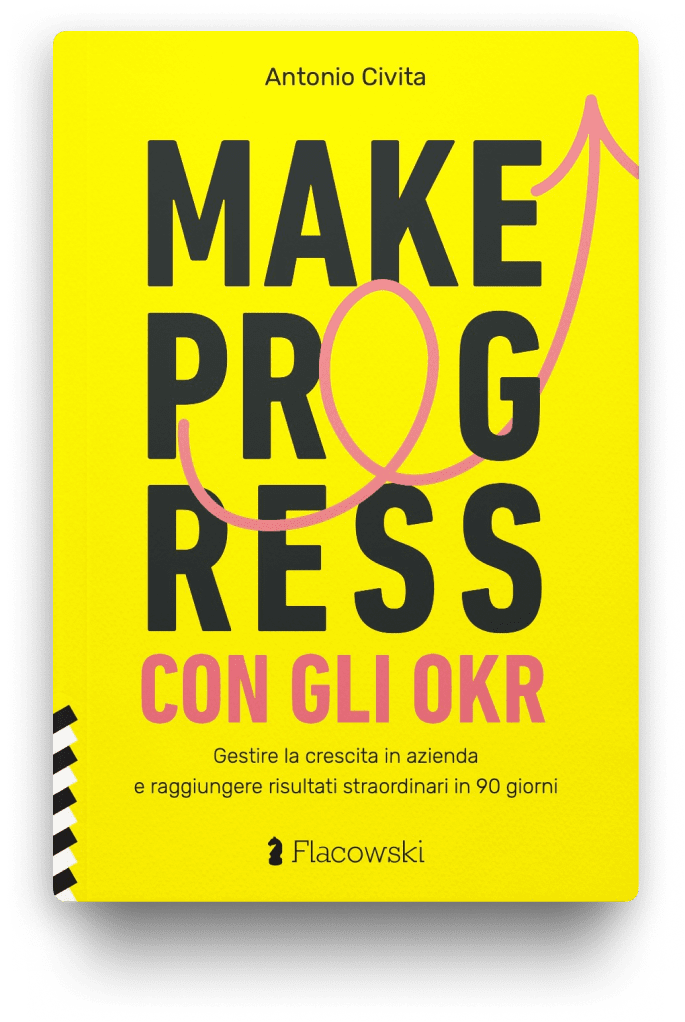
You have until 6 p.m. on Friday, March 28, to access the recording of the Workshop where I showed more than 105 live participants, step by step, how to implement OKRs the right way, with MAKE PROGRESS®.
👉 YES, I WANT TO MAKE OKR WORK
ALWAYS MAKE PROGRESS ⤴
Antonio
—
PS: I just received this message from Antonella Ghidini, Faglia-Bontacchio Personnel Manager and Ass. who attended the September cohort:
“A frighteningly enlightening journey in some respects! I gained the realization that with a clear method and a vision based on concrete numbers we can really do better and more. It will revolutionize the approach to the issues we are dealing with.”