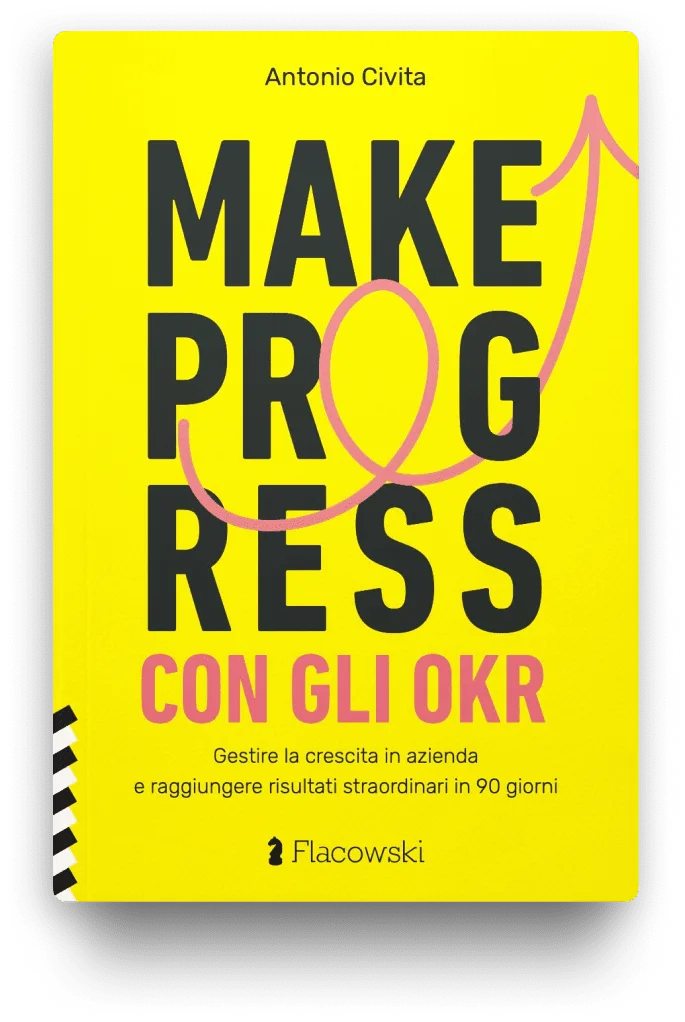
| Before we begin Applications are open for the September cohort to become a Qualified MAKE PROGRESS® OKR Coach. → Watch the webinar and claim your bonuses. |

«The supreme art of war is to subdue the enemy without fighting.»
— Sun Tzu, Chinese general and philosopher
—
ATTENTION! THIS IS AN INTERACTIVE NEWSLETTER AND REQUIRES YOUR ACTIVE PARTICIPATION. READ EVERYTHING AND START READING THE 13 CHAPTERS.
It all began with a trip to China. Twenty hours of flying, there and back. I don’t like watching movies on planes, so I brought a book with me that was, let’s say, on theme: The Art of War by Sun Tzu.
It’s a book you can read in an hour. But I still had nineteen hours ahead of me, so I decided to take a deeper dive.
Why? This is one of those texts that is always cited as a cornerstone of strategy. And yet, it is rarely read carefully and truly connected to modern strategic thinking. So I decided to take on an exercise: compare Sun Tzu’s principles with the theoretical framework of MAKE PROGRESS® and the strategic principles I use every day.
This newsletter will be different from the usual.
It will be interactive. It consists of 13 emails, one for each chapter of the book. Each one includes:
- the chapter’s most important passage,
- its original meaning in the context of the book,
- my interpretation through the lens of contemporary strategy,
- a practical challenge to apply these concepts using MAKE PROGRESS® tools.
A word of caution
The Art of War is about conflict, deception, and destroying the enemy. But business is not war. In war, the aim is to eliminate your opponent; in business, you win by creating and delivering value to customers.
If we take Sun Tzu literally, we risk falling into the trap of obsessive, zero-sum competition. But if we read his work as a series of metaphors, we can turn his principles into useful lessons for choosing our playing field and our winning mechanics. In MAKE PROGRESS®, we’re talking about Go-to-Market strategy and the Growth Machine… but that’s not all!
Why revisit these principles today
Timeless texts have two virtues: they don’t go out of fashion, and they make us think deeply.
Sun Tzu wrote two thousand five hundred years ago, but his aphorisms remain thought-provoking because they touch on eternal strategic dilemmas: planning or improvisation, brute force or intelligence, rigidity or adaptation.
Revisiting these fundamental questions helps us clear the noise from strategy and get back to what matters.
This 13-part newsletter is a journey: a classic read through a modern lens, examined step by step alongside strategic choices that still matter today.
Begin your journey
Click here to sign up for this series.
ALWAYS MAKE PROGRESS 🐲